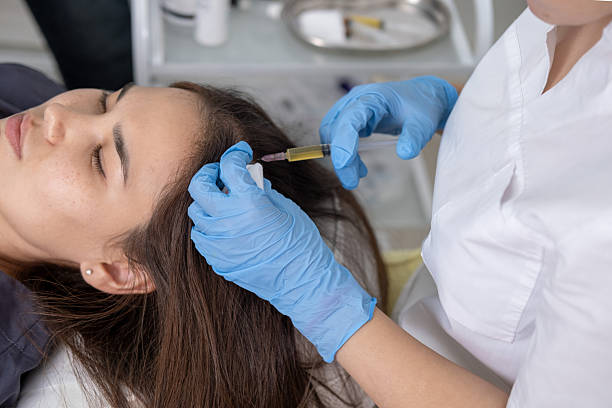
Hair loss affects millions of men and women worldwide, leading many people to explore modern hair restoration treatments. Among the most popular methods today are FUE (Follicular Unit Extraction) and DHI (Direct Hair Implantation) hair transplants. While both procedures aim to restore natural-looking hair growth, they differ in technique, tools, recovery, and cost.
In this blog, we’ll compare FUE vs DHI hair transplant methods to help you understand which option may be better suited for your hair restoration goals.
Follicular Unit Extraction (FUE) is a minimally invasive hair transplant procedure where individual hair follicles are extracted from the donor area (usually the back or sides of the scalp) and implanted into thinning or balding areas.
Direct Hair Implantation (DHI) is an advanced version of FUE that uses a specialized implantation pen, commonly called a Choi implanter pen, to directly implant hair follicles into the scalp.
| Feature | FUE | DHI |
|---|---|---|
| Technique | Extraction + channel creation + implantation | Direct implantation with pen |
| Tools Used | Micro-punch tools | Choi implanter pen |
| Incisions Required | Yes | Minimal |
| Recovery Time | Fast | Slightly faster |
| Density Control | Good | Excellent |
| Cost | More affordable | More premium |
| Ideal For | Large bald areas | Hairline and dense packing |
Both FUE and DHI can deliver highly natural results when performed by experienced surgeons. However, DHI often provides slightly better precision in angle, direction, and density placement, especially for:
That said, the final outcome depends more on the surgeon’s expertise than the technique itself.
Most patients return to normal activities within a few days after either procedure.
The cost of a hair transplant varies depending on:
In general:
Patients should focus on quality and surgeon experience rather than choosing solely based on price.
FUE may be ideal if you:
DHI may be better if you:
There is no universal “best” method between FUE and DHI. Both are advanced, effective hair transplant techniques with excellent success rates.
The best approach is to consult an experienced hair transplant specialist who can evaluate your hair loss pattern, donor area, and expectations before recommending the right technique.
DHI offers greater implantation precision and density control, but FUE is highly effective for larger sessions and is more affordable.
Both procedures are performed under local anesthesia, so discomfort is usually minimal.
Initial growth starts around 3–4 months, while full results typically appear within 12–18 months.
Yes, transplanted hair follicles are generally permanent and continue to grow naturally.
Both methods leave minimal scarring, but DHI may cause slightly less visible trauma in the recipient area.
At Elite Aesthetics & Polyclinic, we focus on delivering ethical, evidence-based, and personalized treatment plans.
Address: 2nd floor, No62, opp. Sreeji PG, near Bannerghatta Road, Anthappa Layout, Phase 4, J. P. Nagar, Bengaluru, Karnataka 560078
Phone Number: +91-7338586418
Email: info@eliteaestheticsbangalore.in
Copyright @2026, All Rights Reserved by Elite Aesthetics & Polyclinic Design & Developed by STANDSWEB.
WhatsApp us